
Context-aware pipelines
Pipelines that know where each person stands.
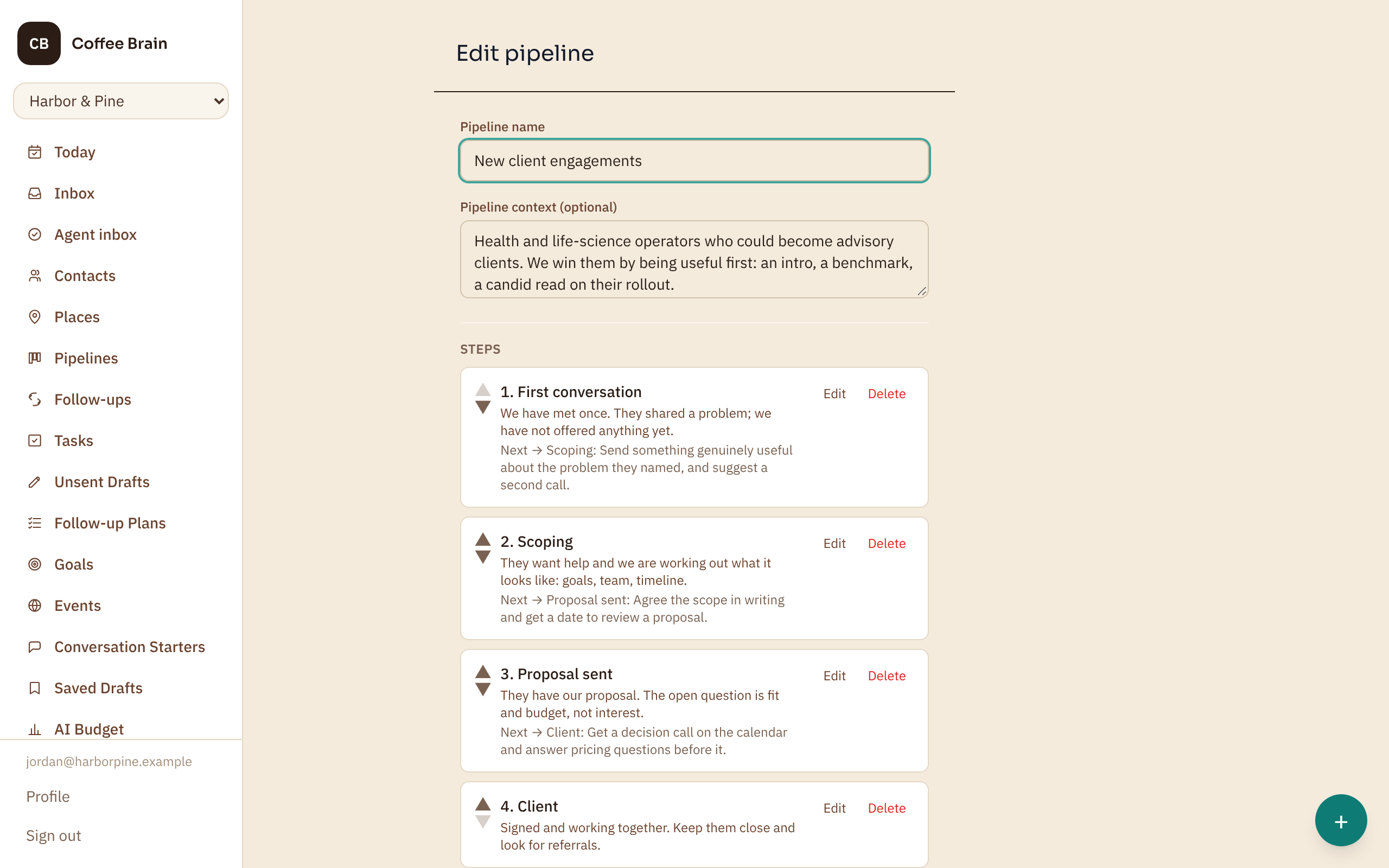
In most tools a pipeline stage is a label. In Coffee Brain, the pipeline and every step in it carry context — what the stage means, and what moves someone forward — so every next step, message and cleanup is written for where that person actually is.
Already a member? Sign in
Included in the Pro plan. Compare the plans
Why it matters
A stage on its own says almost nothing
Traditional pipelines track where a deal is. They cannot tell anything that works on your behalf where a person is — their current state, and their relationship to you and the network.
A label, not a situation
Knowing someone is at “Proposal sent” does not say what is open, what they are weighing, or what would move them.
Read only when you remember
The meaning of each stage lives in your head, so nothing written for that person can use it.
Generic next moves
Without that context, every follow-up reads like a check-in, whether they met you yesterday or are about to sign.
How it works
Context-aware pipelines in three steps
- 1
The pipeline sets the scene
Each pipeline says what it is for and who it is for — a context statement and an ideal client profile — so the purpose behind the list is never lost.
- 2
Every step has context and a goal
Each step says what being there means, in your words, and what should happen to move someone to the next step.
- 3
Membership feeds the AI
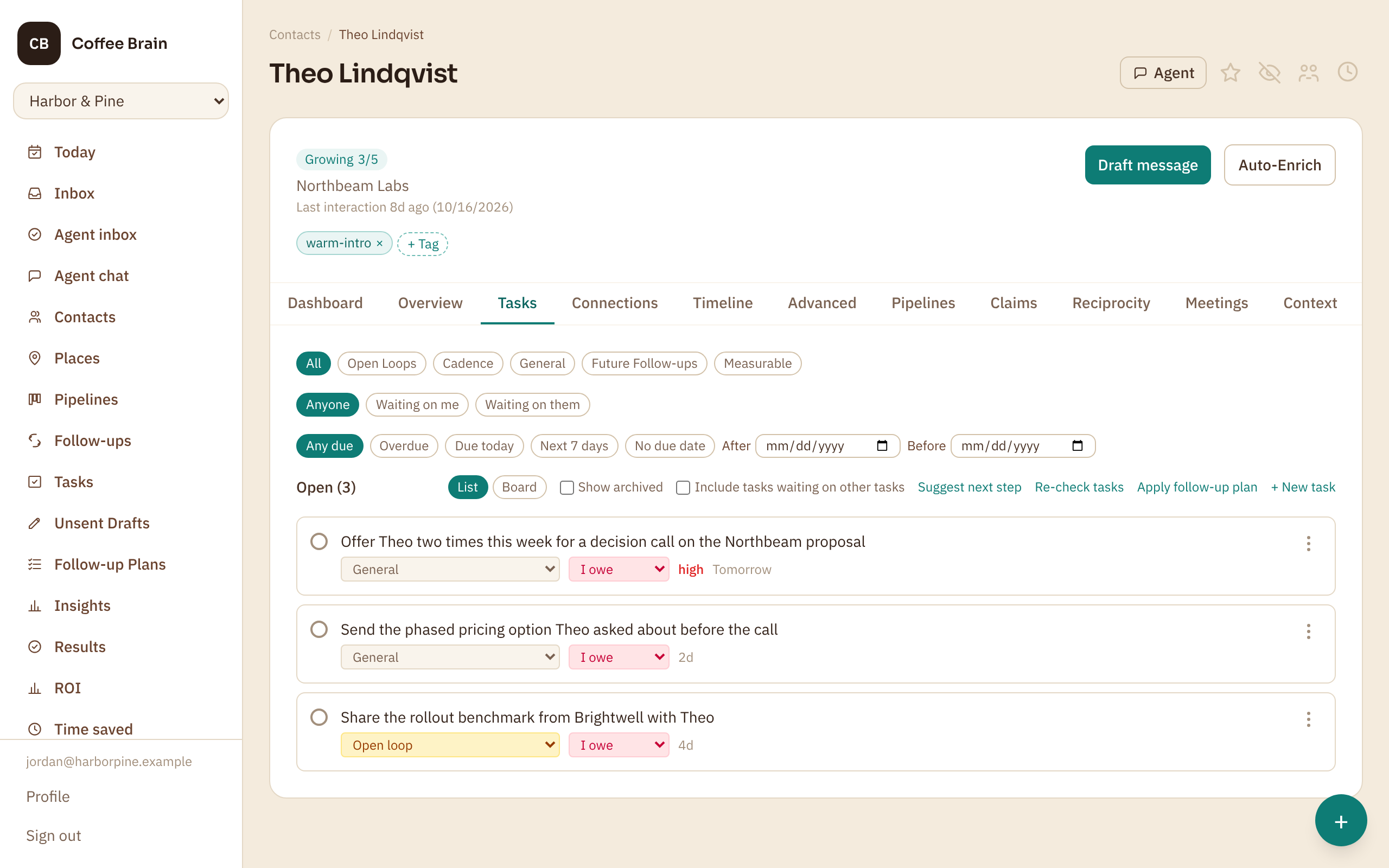
For anyone in a pipeline, their position — the pipeline, their step and what comes next — is part of the context whenever Coffee Brain works on their behalf.
What it does
Where the context goes
Next steps
Suggested next steps aim at the step they are heading for, not a generic check-in.
Messages and replies
Drafts and replies are written for where the relationship actually stands.
Task and draft cleanup
When open tasks and unsent drafts are re-checked, their position helps decide what is still worth doing and what has moved on.
Side by side
The difference it makes
A suggested next step for Dana, a prospect you sent a proposal to last week
- Without pipeline context
- Check in with Dana to see how things are going.
- With pipeline context
- Dana is at “Proposal sent”, and the goal is a decision call. Send a short note offering two times this week to walk through the pricing options together.
Use cases
When it pays off most
Client and sales funnels
Prospect, conversation, proposal, client. Drafts and next steps fit each stage, so a first conversation never gets a closing email.
Investor outreach
Follow-ups know whether someone has seen the deck, taken a meeting or committed — and ask for the right next thing.
Community and events
How you met, and what comes next, carries forward into every follow-up after the event.
See it
Context-aware pipelines, inside Coffee Brain
Get started
Give every stage its meaning
Create an account with just your email, set up a pipeline in plain language, and let every step shape what comes next.
Already a member? Sign in
Included in the Pro plan. Compare the plans